
ERA Test for IVF in Noida Endometrial receptivity testing for selected IVF patients with implantation concerns
If you have experienced repeated unsuccessful embryo transfers or have been advised to explore endometrial receptivity testing, you may have come across the ERA Test.
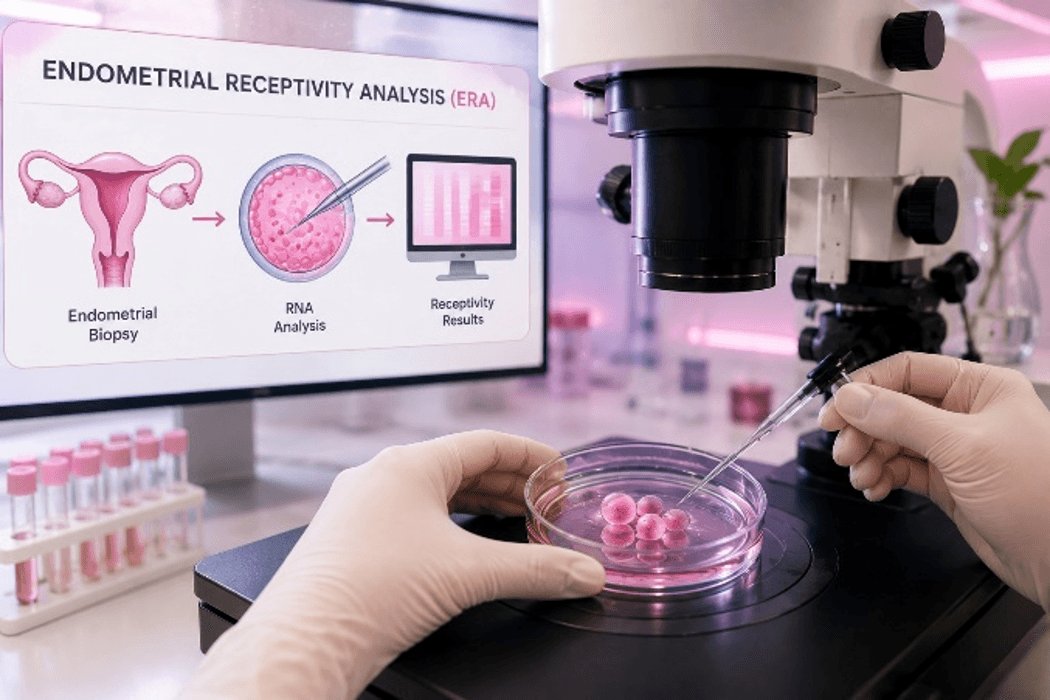
What is ERA Test for IVF?
ERA is a type of Endometrial Receptivity Test. It involves taking a small biopsy from the lining of the uterus, known as the endometrium, and analysing patterns of gene expression.
The test aims to determine whether the endometrium is receptive, pre-receptive, or post-receptive. The goal is to estimate whether the timing of embryo transfer matches the proposed window of implantation.
However, the clinical value of routine ERA testing remains uncertain.
At Divine IVF, Sector 76, Noida, Dr. Mandavi Rai provides personalised IVF evaluation and treatment planning based on your fertility history, embryo-transfer outcomes, uterine health and current scientific evidence. ERA is not a routine test required for every IVF patient. It should only be considered after careful assessment of whether it is likely to provide clinically useful information in your individual case.
How it works
Step 1 – IVF History Review
The fertility specialist reviews number of previous IVF cycles, number of embryo transfers, embryo quality, embryo stage, fresh vs frozen transfer, previous implantation outcomes, endometrial findings, and previous pregnancy history.
Step 2 – Uterine and Endometrial Evaluation
Before considering ERA, other possible uterine or endometrial factors may need review including fibroids, polyps, adhesions, hydrosalpinx, endometrial thickness, and other structural abnormalities.
Step 3 – Mock or Preparation Cycle
The endometrium is prepared in a manner similar to the intended frozen embryo transfer protocol. This may involve estrogen, progesterone, and ultrasound monitoring.
Step 4 – Endometrial Biopsy
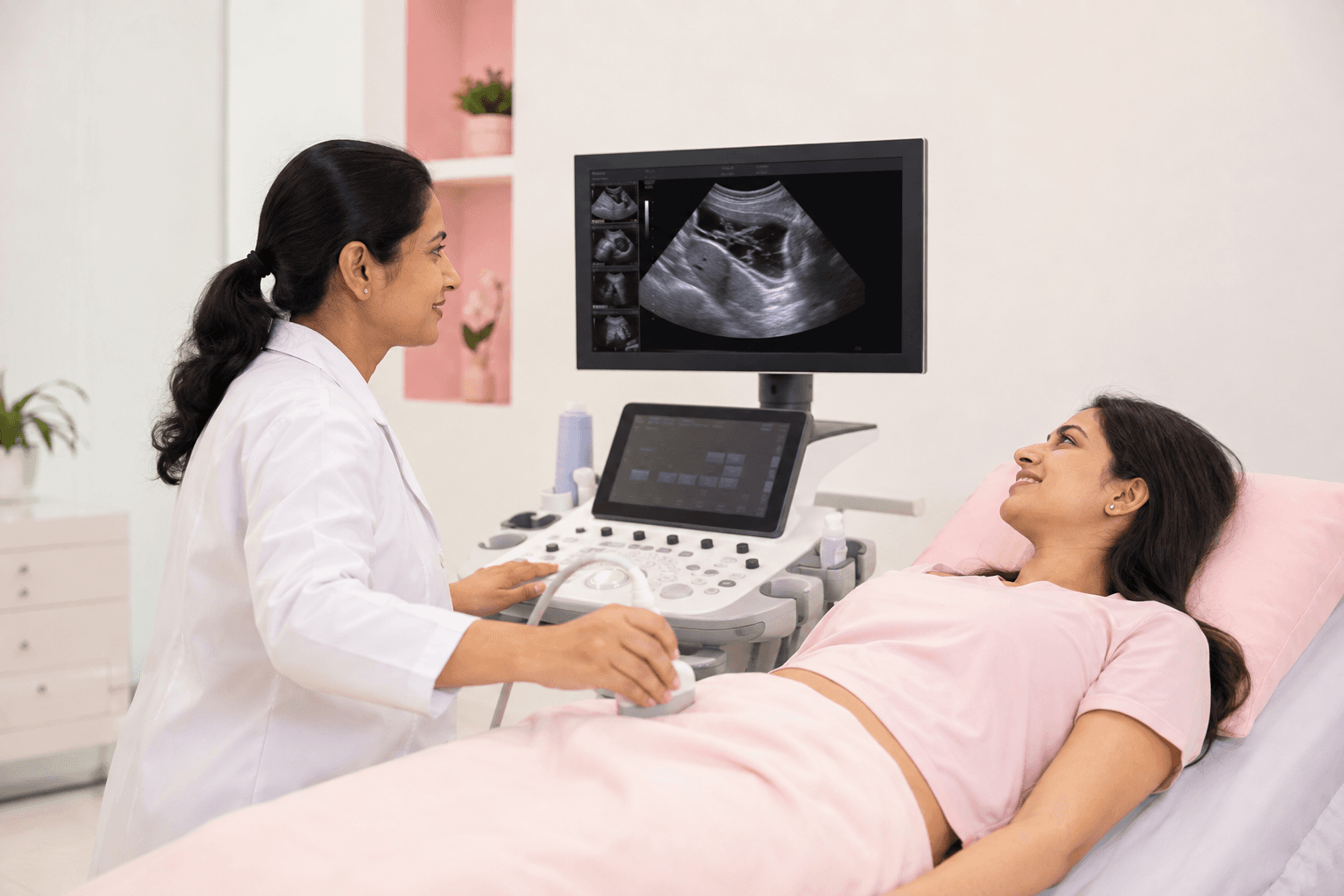
At the planned time, a small sample of endometrial tissue is collected. A thin catheter is inserted through the cervix into the uterus to obtain the biopsy.
Step 5 – Laboratory Analysis
The sample is analysed for gene-expression patterns associated with endometrial receptivity.
Step 6 – Result Interpretation
The result may be reported as receptive, pre-receptive or post-receptive. Your fertility specialist discusses whether the result should influence future treatment timing.
Step 7 – Future Embryo Transfer
If a personalised embryo-transfer plan is chosen, progesterone duration and transfer timing may be adjusted in a future cycle. However, changing transfer timing based on ERA does not guarantee improved implantation or pregnancy.
Benefits
- Information About Endometrial Timing — The test attempts to assess whether the endometrium appears receptive at the biopsy time
- Personalised Embryo Transfer Timing — The result may be used to modify progesterone exposure before transfer
- Additional Investigation in Selected Cases — It may be discussed as part of a broader review after repeated implantation failure
- Provides clear, actionable information about your specific window of receptivity in some cases
- May help avoid wasting good-quality embryos on poorly timed transfers
Things to know
- Not required for every IVF patient
- Involves an endometrial biopsy
- May cause pain or bleeding
- Results may be inconclusive
- Repeat biopsy may occasionally be required
- The implantation window may vary between cycles
- Adds cost to treatment
- May delay embryo transfer
- Has not been shown to routinely improve live-birth outcomes
- HFEA currently rates endometrial receptivity testing red for increasing the chance of having a baby for most fertility patients
Getting ready
Before considering ERA, other possible uterine or endometrial factors may need review. These can include fibroids, polyps, adhesions, hydrosalpinx, endometrial thickness, and other structural abnormalities.
ERA requires a dedicated mock cycle before your real transfer. The endometrium is prepared in a manner similar to the intended frozen embryo transfer protocol. This may involve estrogen, progesterone, and ultrasound monitoring.
You'll be guided on timing medication precisely, since the biopsy needs to be taken at a specific point relative to your hormone protocol for the results to be meaningful. The biopsy is typically performed after approximately 5 days of progesterone exposure — the same time when a transfer would normally occur.
If you're using a medicated frozen embryo transfer (FET) protocol, the mock cycle mimics the same hormonal preparation. If you're using a natural cycle, the ERA can be performed in a natural cycle as well, though timing may be more complex to coordinate.
What to expect
The ERA mock cycle involves daily hormonal medication and monitoring, similar to a standard frozen embryo transfer cycle. The endometrial biopsy itself is a brief procedure — similar to other uterine sampling procedures — performed without sedation in the clinic. You may experience mild cramping or discomfort during the biopsy, similar to period cramps, but it's generally well-tolerated. Results typically take about 2-3 weeks to process before your next steps are planned. Once results are available, Dr. Rai will discuss what they mean for your transfer timing.
ERA Test for IVF in Noida
Endometrial receptivity testing for selected IVF patients with implantation concerns at Divine IVF, Sector 76, Noida.
📍 Sector 76, Noida, Uttar Pradesh
📞 Call: +91 7678451808

What Is an ERA Test?
ERA is a type of Endometrial Receptivity Test.
It involves taking a small biopsy from the lining of the uterus, known as the endometrium, and analysing patterns of gene expression.
The test aims to determine whether the endometrium is:
- Receptive — The biopsy timing is considered to fall within the predicted implantation window
- Pre-receptive — The endometrium may not yet have reached the predicted receptive phase
- Post-receptive — The predicted receptive phase may have already passed
The goal is to estimate whether the timing of embryo transfer matches the proposed window of implantation.
However, the clinical value of routine ERA testing remains uncertain.
What Is the Window of Implantation?
The window of implantation refers to a period during which the endometrium is considered most suitable for an embryo to implant.
In a frozen embryo transfer cycle, progesterone exposure and embryo-transfer timing are carefully coordinated.
ERA attempts to identify whether the standard transfer timing may need adjustment.
However, questions remain about:
- How accurately receptivity tests identify the ideal window
- Whether the implantation window is consistent across treatment cycles
- Whether personalised transfer based on the test improves live-birth outcomes
How Does ERA Work?
ERA generally involves:
- Preparing the endometrium in a cycle similar to a frozen embryo transfer cycle
- Taking an endometrial biopsy
- Sending the sample for molecular analysis
- Assessing gene-expression patterns
- Categorising the endometrium as receptive or non-receptive
- Using the result to guide embryo-transfer timing in a future cycle, if clinically appropriate
What Does an ERA Result Mean?
The report may describe the endometrium as:
- Receptive — The biopsy timing is considered to fall within the predicted implantation window
- Pre-Receptive — The endometrium may not yet have reached the predicted receptive phase
- Post-Receptive — The predicted receptive phase may have already passed
A fertility specialist interprets the result together with the complete IVF history.
Who May Be Considered for an ERA Test?
ERA should not be automatically recommended to all IVF patients.
It may sometimes be discussed in selected situations.
Repeated Unsuccessful Embryo Transfers
Patients who have had multiple unsuccessful transfers may ask whether implantation timing could be a factor. However, other causes should be reviewed first.
Recurrent Implantation Failure Concerns
A broader evaluation may include embryo quality, chromosomal factors, uterine cavity, endometrial factors, hydrosalpinx, transfer technique, male fertility factors, and female age. ERA is only one possible add-on and its routine benefit remains unproven.
Previous Good-Quality Embryo Transfers Without Pregnancy
If good-quality embryos have repeatedly failed to implant, a full review of treatment history is important before considering add-on testing.
Who Does Not Routinely Need ERA?
ERA is generally not required simply because a patient is:
- Starting a first IVF cycle
- Having a first frozen embryo transfer
- Using a blastocyst
- Undergoing ICSI
- Having embryos genetically tested
Routine use has not been shown to improve live-birth outcomes for most patients.


ERA Test and Recurrent Implantation Failure
Repeated implantation failure is complex and may have several causes. Possible factors include:
ERA should not replace a comprehensive assessment of these possible causes.
ERA in Specific Situations
ERA Test After Failed IVF
After unsuccessful IVF, the first step should generally be a structured review of the previous cycle. This may include ovarian response, egg quality, fertilisation, embryo development, blastocyst formation, embryo-transfer technique, endometrial preparation, male-factor infertility, and genetic factors. ERA may be discussed only after considering these more established factors.
ERA and Frozen Embryo Transfer
ERA is usually relevant to the timing of a future Frozen Embryo Transfer (FET). A mock cycle is often designed to mimic the hormonal protocol intended for the actual transfer. If the result is used clinically, the duration of progesterone exposure may be adjusted.
ERA and Blastocyst Transfer
Blastocyst transfer timing is already coordinated with progesterone exposure in standard fertility practice. ERA proposes additional personalised timing based on biopsy results. However, current evidence does not show that this routinely improves live-birth outcomes.
ERA vs Other Approaches
ERA vs Standard Embryo Transfer
Standard Embryo Transfer
Transfer timing is planned using established IVF protocols based on embryo stage, ovulation, hormonal preparation, and progesterone exposure.
ERA-Guided Transfer
Transfer timing may be adjusted according to an endometrial receptivity test result. The key issue is that routine ERA-guided transfer has not been shown to consistently improve pregnancy or live-birth outcomes.
ERA vs Endometrial Scratch
These are different procedures. ERA is an endometrial biopsy taken primarily for molecular receptivity testing. Endometrial Scratch is when the endometrium is intentionally injured with the theory that the healing response may improve implantation. Both are fertility add-ons, and neither should automatically be used for every patient.
Does ERA Improve IVF Success?
Current evidence does not support routine ERA testing as a proven way to increase IVF success.
HFEA currently rates endometrial receptivity testing red for increasing the chance of having a baby for most fertility patients because available moderate/high-quality evidence suggests it may reduce treatment effectiveness.
Does ERA Improve Implantation Rate?
Some earlier studies proposed that personalised embryo transfer may improve implantation in selected patients. However, stronger evidence has not confirmed a consistent benefit. It is therefore better to describe ERA as an investigational or optional add-on rather than a proven implantation-enhancing test.
Does ERA Reduce Miscarriage?
ERA is designed primarily around embryo-transfer timing and endometrial receptivity. It should not be promoted as a proven miscarriage-prevention test. Miscarriage may be caused by many factors, particularly embryo chromosomal abnormalities, maternal age, uterine conditions and other medical factors.
Benefits, Limitations, and Risks of ERA
Benefits Proposed for ERA
Possible proposed benefits include:
- Information About Endometrial Timing — The test attempts to assess whether the endometrium appears receptive at the biopsy time
- Personalised Embryo Transfer Timing — The result may be used to modify progesterone exposure before transfer
- Additional Investigation in Selected Cases — It may be discussed as part of a broader review after repeated implantation failure
However, these proposed benefits do not mean the test has been proven to improve live birth.
Limitations of the ERA Test
ERA has several important limitations:
- It is not required for every IVF patient
- It involves an endometrial biopsy
- It may cause pain or bleeding
- Results may be inconclusive
- Repeat biopsy may occasionally be required
- The implantation window may vary
- It adds cost to treatment
- It may delay embryo transfer
- It has not been shown to routinely improve live-birth outcomes
Risks of ERA Testing
Possible risks include:
- Cramping
- Pain
- Light bleeding
- Infection
- Rare uterine perforation
- Additional treatment delay
The biopsy may occasionally need to be repeated if the sample is insufficient or the result is inconclusive. HFEA also notes that the associated freeze-all pathway introduces a small risk that not every frozen embryo will survive thawing.
ERA Test Cost in Noida
The ERA Test cost in Noida may depend on:
Because ERA is an add-on rather than a standard requirement for all IVF patients, patients should ask whether the test is medically justified before paying for it.
Questions to Ask Before Choosing an ERA Test
Before undergoing ERA, ask:
Why Choose Divine IVF for ERA and IVF Evaluation
- ✓Personalised IVF Review — Previous IVF and embryo-transfer cycles can be reviewed before adding optional tests.
- ✓Uterine and Endometrial Assessment — Possible uterine factors can be evaluated as part of implantation-failure assessment.
- ✓Evidence-Based Treatment Discussion — Add-on tests such as ERA should be discussed with clear information about their benefits, limitations and current evidence.
- ✓IVF and Frozen Embryo Transfer Planning — Treatment can be personalised according to embryo stage, endometrial preparation and previous outcomes.
- ✓Doctor-Led Fertility Care — Treatment planning is provided under the guidance of Dr. Mandavi Rai, Gynecologist & IVF Specialist in Noida.
- ✓Convenient Location in Sector 76, Noida — Divine IVF is located in Sector 76, Noida, for patients seeking IVF evaluation and embryo-transfer planning.
Book an ERA / IVF Consultation in Noida
If you have experienced repeated unsuccessful embryo transfers or failed IVF and are considering an ERA test, start with a detailed review of your previous treatment. At Divine IVF, Sector 76, Noida, Dr. Mandavi Rai provides personalised IVF and embryo-transfer planning based on your fertility history and available evidence.
Divine IVF · Sector 76, Noida, Uttar Pradesh
Resources
Common questions
ERA commonly refers to Endometrial Receptivity Analysis or Endometrial Receptivity Array.
ERA is an endometrial receptivity test that analyses a biopsy of the uterine lining to estimate whether the endometrium is receptive at a particular time.
It is the period when the endometrium is considered most suitable for embryo implantation.
No. Routine ERA testing is not recommended for every IVF patient.
It may be discussed in selected patients with repeated unsuccessful embryo transfers, although its benefit remains uncertain.
The entire IVF cycle should first be reviewed. ERA may be discussed in selected circumstances but should not automatically be added after one failed cycle.
Current evidence does not show a routine improvement in live-birth outcomes. HFEA currently rates endometrial receptivity testing red for increasing the chance of having a baby for most fertility patients.
The endometrial biopsy can cause temporary cramping, pain or spotting.
It means the biopsy timing was classified as falling within the test's predicted implantation window.
It means the test predicts that the endometrium had not yet reached the proposed receptive phase.
It means the test predicts that the proposed receptive phase may already have passed.
No.
ERA should not be considered a proven miscarriage-prevention test.
If used, it is commonly performed in a mock or preparation cycle designed to resemble the intended frozen embryo transfer protocol.
Cost varies according to the biopsy, laboratory analysis, medicines, monitoring and associated fertility treatment.
You can consult Dr. Mandavi Rai at Divine IVF, Sector 76, Noida to review previous IVF and embryo-transfer outcomes and discuss whether an endometrial receptivity test is appropriate.
Ready to talk to Dr. Mandavi Rai?
Bring your questions, your history, and your pace — we`ll build the next step together.