
Laparoscopy in Noida Minimally invasive assessment and treatment for selected gynaecological and fertility-related conditions
Laparoscopy is a minimally invasive surgical procedure that allows a gynaecologist to directly examine the pelvic organs through small abdominal incisions.
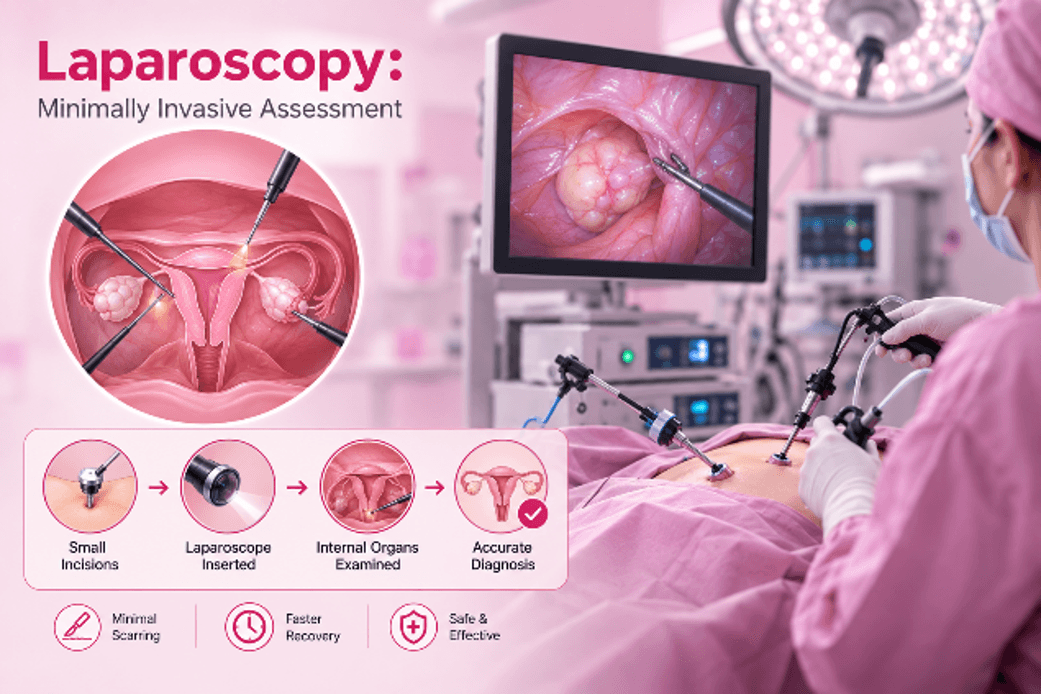
What is Laparoscopy?
Laparoscopy is a type of minimally invasive surgery performed using a thin instrument called a laparoscope. The laparoscope contains a camera and light source.
It is inserted through a small incision in the abdomen, allowing the surgeon to view structures such as the uterus, fallopian tubes, ovaries, pelvic cavity, and outer surface of reproductive organs.
Additional small instruments can be inserted through other tiny incisions if treatment is required. Because the procedure uses small incisions rather than a large abdominal incision, laparoscopy is commonly referred to as keyhole surgery or minimally invasive surgery.
At Divine IVF, Sector 76, Noida, Dr. Mandavi Rai provides personalised gynaecological and fertility evaluation to determine whether laparoscopy is actually required. Laparoscopy is not routinely necessary for every infertility patient. Less invasive investigations are generally used first unless there is a specific clinical indication.
How it works
Step 1 – Preoperative Assessment
Before surgery, the doctor reviews symptoms, medical history, fertility history, ultrasound reports, previous surgery, current medicines, and relevant blood tests.
Step 2 – Anaesthesia
Laparoscopy is generally performed under general anaesthesia, meaning the patient is asleep during the procedure.
Step 3 – Small Abdominal Incision
A small incision is usually made around or below the belly button.
Step 4 – Abdominal Inflation
Carbon dioxide gas is introduced into the abdomen. This creates space so that the pelvic organs can be viewed more clearly.
Step 5 – Camera Examination
The laparoscope is inserted and the surgeon examines the uterus, ovaries, fallopian tubes, and pelvic cavity.
Step 6 – Additional Treatment if Required
If an abnormality is identified and treatment has been planned, additional instruments may be inserted through small incisions.
Step 7 – Completion
The instruments are removed and the small incisions are closed.
Benefits
- Smaller incisions and generally faster recovery than open surgery — minimal scarring
- Direct visual assessment of the pelvis — the most accurate way to diagnose many pelvic conditions
- Can combine diagnosis and treatment in one procedure — no need for a second surgery
- Shorter hospital stay — typically same-day discharge
- Less post-operative pain and reduced risk of complications compared to open surgery
- Can be used to treat endometriosis, remove ovarian cysts, release adhesions, and more
- Provides the most definitive assessment of pelvic health for fertility evaluation
Things to know
- Performed under general anaesthesia, with associated standard risks that Dr. Rai will discuss beforehand
- Recovery time can vary depending on findings and any treatment performed during the procedure
- As with any surgery, involves risks including bleeding, infection, and damage to surrounding structures
- Some patients may require open surgery if laparoscopic findings are more complex than expected
- Shoulder-tip pain from gas used during the procedure is common and can last a few days
- Not every patient with pelvic pain or infertility needs laparoscopy — it's considered selectively
Getting ready
Before surgery, the doctor reviews symptoms, medical history, fertility history, ultrasound reports, previous surgery, current medicines, and relevant blood tests.
Because laparoscopy is performed under general anaesthesia, you'll be given specific fasting instructions ahead of the procedure — typically no food or drink after midnight the night before. A pre-operative assessment will be arranged to confirm you're fit for anaesthesia.
You'll need to arrange for someone to take you home afterward, as you won't be able to drive for 24-48 hours after general anaesthesia. Plan for a quiet day or two immediately following the procedure, depending on what's found and treated.
You may be advised to stop certain medications before the procedure, particularly blood thinners. Dr. Rai will provide specific instructions tailored to your situation.
What to expect
Most laparoscopic procedures are same-day or short-stay procedures. After the procedure, you'll be in recovery for 1-2 hours before discharge. Some abdominal discomfort and shoulder-tip pain (from gas used during the procedure) is common for a few days afterward. Most people return to light activity within about a week, though recovery time depends on what was found and treated during the procedure. Dr. Rai will provide specific recovery guidance tailored to your situation.
Laparoscopy in Noida
Minimally invasive assessment and treatment for selected gynaecological and fertility-related conditions at Divine IVF, Sector 76, Noida.
📍 Sector 76, Noida, Uttar Pradesh
📞 Call: +91 7678451808
What Is Laparoscopy?
Laparoscopy is a type of minimally invasive surgery performed using a thin instrument called a laparoscope.
The laparoscope contains a camera and light source. It is inserted through a small incision in the abdomen, allowing the surgeon to view structures such as:
- Uterus
- Fallopian tubes
- Ovaries
- Pelvic cavity
- Outer surface of reproductive organs
Additional small instruments can be inserted through other tiny incisions if treatment is required.
Because the procedure uses small incisions rather than a large abdominal incision, laparoscopy is commonly referred to as keyhole surgery or minimally invasive surgery.
Why Is Laparoscopy Used in Gynaecology?
Laparoscopy can help diagnose and sometimes treat several gynaecological conditions.
These may include:
If an abnormality is identified, treatment can often be performed during the same surgical procedure depending on the condition.
Is Laparoscopy Used for Infertility?
Yes, but not in every infertility case.
Laparoscopy can provide a direct view of the pelvic reproductive organs and may identify factors that are difficult to diagnose through routine imaging. These may include endometriosis, pelvic adhesions, tubal damage, and certain pelvic abnormalities.
However, modern fertility evaluation usually starts with less invasive methods such as ultrasound and tubal assessment.
ASRM advises that laparoscopy should not be used routinely in infertility evaluation when there is no suspected pelvic pathology or another specific surgical indication.
When May Laparoscopy Be Recommended for Fertility?
A fertility specialist may consider laparoscopy in selected situations such as:
Suspected Endometriosis
Symptoms may include severe period pain, chronic pelvic pain, pain during intercourse, difficulty conceiving, or endometrioma on ultrasound. Laparoscopy can directly visualise endometriosis and, in selected cases, allow treatment during the same procedure.
Suspected Pelvic Adhesions
Scar tissue may develop after pelvic infection, previous surgery, endometriosis, or inflammation. Adhesions can affect the relationship between the ovaries and fallopian tubes. Laparoscopy may help diagnose and sometimes treat adhesions.
Abnormal Fallopian Tube Findings
If previous testing suggests tubal blockage or another abnormality, laparoscopy may occasionally be used for further assessment.
Severe Pelvic Pain
Persistent or severe pelvic pain may require laparoscopy when imaging and other investigations do not provide a clear diagnosis.
Ovarian Cysts or Endometriomas
Certain ovarian cysts may require laparoscopic evaluation or removal depending on size, symptoms, ultrasound appearance, persistence, and fertility goals.
Diagnostic Laparoscopy vs Operative Laparoscopy
Diagnostic Laparoscopy
Primarily performed to examine the pelvis and identify abnormalities. It may help diagnose:
- Endometriosis
- Adhesions
- Tubal abnormalities
- Pelvic masses
- Causes of pelvic pain
Operative Laparoscopy
If a treatable problem is identified, additional instruments may be used during the procedure. Depending on the condition, operative laparoscopy may involve:
- Removing endometriosis
- Releasing adhesions
- Removing ovarian cysts
- Treating selected fibroids
- Managing ectopic pregnancy
- Other gynaecological procedures
The exact treatment depends on the diagnosis.

Laparoscopy and Endometriosis
Endometriosis is one of the most common fertility-related reasons laparoscopy may be considered.
The condition occurs when tissue similar to the uterine lining grows outside the uterus. Possible symptoms include painful periods, pelvic pain, pain during intercourse, difficulty conceiving, and bowel or bladder symptoms in some cases.
Laparoscopy allows the surgeon to directly inspect the pelvis and identify endometriosis lesions. If appropriate, lesions may be treated during the same procedure.
Laparoscopy and Fallopian Tube Assessment
Laparoscopy and Fallopian Tube Assessment
Healthy fallopian tubes are important for natural conception. During selected fertility evaluations, laparoscopy may be combined with a dye test, sometimes called chromopertubation or hydrotubation.
Dye is introduced through the cervix and uterus while the surgeon observes whether it passes through the fallopian tubes. This can help evaluate whether the tubes appear open.
NHS patient guidance notes that laparoscopy with dye testing may be used to investigate fertility problems and possible tubal blockage.
Laparoscopy and Dye Test
During a laparoscopy and dye test:
- The patient is placed under anaesthesia
- A laparoscope is inserted through a small abdominal incision
- The pelvic organs are examined
- Dye is introduced through the cervix
- The surgeon observes whether the dye passes through the fallopian tubes
- Any additional pelvic abnormalities may also be assessed
This procedure may provide information about both tubal patency and pelvic anatomy.
Laparoscopy for Specific Conditions
Laparoscopy for Pelvic Adhesions
Pelvic adhesions are bands of scar tissue that can cause organs to stick together. They may develop following endometriosis, infection, previous pelvic surgery, or inflammation. Significant adhesions can sometimes interfere with fertility. Laparoscopy allows direct assessment and may allow adhesions to be divided when clinically appropriate.
Laparoscopy for Ovarian Cysts
Many ovarian cysts do not require surgery. However, laparoscopy may be considered if a cyst persists, causes significant pain, becomes large, has concerning ultrasound characteristics, or interferes with fertility treatment. A fertility-focused approach is important because ovarian surgery can affect ovarian reserve in some situations.
Laparoscopy for Fibroids
Some fibroids may be treated laparoscopically depending on their size, number, location, symptoms, and effect on fertility. Not every fibroid requires treatment. A fibroid affecting the uterine cavity may require a different procedure such as hysteroscopy.
Laparoscopy vs Other Investigations
Laparoscopy vs Hysteroscopy
These procedures examine different areas. Laparoscopy uses a camera inserted through the abdomen to examine the outside of the uterus, ovaries, fallopian tubes and pelvis. Hysteroscopy uses a camera inserted through the vagina and cervix to examine the inside of the uterine cavity. Depending on the fertility problem, one or both procedures may be considered.
Laparoscopy vs Ultrasound
Ultrasound is usually a first-line, non-invasive investigation. It can provide information about the uterus, ovaries, fibroids, ovarian cysts, endometriomas, and other pelvic abnormalities. Laparoscopy provides a direct surgical view but is more invasive. For this reason, it is generally reserved for situations where the information gained is expected to influence diagnosis or treatment.
Laparoscopy and IVF
Is Laparoscopy Necessary Before IVF?
No.
Laparoscopy is not routinely required before IVF. Most patients can begin fertility treatment after appropriate non-invasive evaluation.
Laparoscopy may be considered before IVF if there is significant pelvic pain, suspected endometriosis, suspected hydrosalpinx or tubal disease, persistent ovarian cyst, previous pelvic infection or surgery, or another surgical indication. The decision should depend on whether surgery is likely to change fertility management.
Laparoscopy for Endometriosis Before IVF
Whether endometriosis surgery should be performed before IVF depends on severity, pain symptoms, ovarian reserve, presence of endometriomas, age, previous treatment, and fertility goals.
Surgery is not automatically required simply because endometriosis is suspected.
A fertility specialist should consider the possible benefits against risks to ovarian reserve and treatment delay.
Is Laparoscopy Painful?
Because the procedure is performed under anaesthesia, pain is generally controlled during surgery.
After surgery, patients may experience:
These symptoms usually improve during recovery.
Recovery After Laparoscopy
Recovery depends on whether the procedure is diagnostic or involved more extensive surgery.
After a minor laparoscopy:
- Many patients go home the same day
- Mild discomfort may continue for several days
- Light activities may resume relatively soon
More complex surgery may require a longer recovery period.
Your doctor will advise when to resume work, exercise, heavy lifting, and sexual activity.
ACOG notes that minor procedures may allow return to regular activity relatively quickly, while more complex operations require more recovery time.
Benefits and Risks of Laparoscopy
Benefits of Minimally Invasive Laparoscopy
Compared with traditional open surgery, potential advantages may include:
- Smaller incisions
- Less visible scarring
- Shorter hospital stay in many cases
- Faster recovery for selected procedures
- Direct visualisation of pelvic anatomy
- Ability to diagnose and treat certain problems during the same procedure
The exact benefit depends on the type of surgery performed.
Risks of Laparoscopy
Although laparoscopy is minimally invasive, it is still surgery. Possible complications may include:
Individual risks depend on the procedure and medical history.
Warning Signs After Laparoscopy
Contact your doctor promptly if you develop:
These are among the warning symptoms highlighted in ACOG patient guidance.
Laparoscopy and Fertility
Laparoscopy and Fertility Treatment
Laparoscopy may affect the fertility plan when it identifies conditions such as endometriosis, significant adhesions, tubal damage, hydrosalpinx, or ovarian pathology.
After surgery, possible fertility options may include trying naturally, ovulation treatment, IUI, IVF, or ICSI. The appropriate next step depends on age, ovarian reserve, sperm parameters and surgical findings.
Can Laparoscopy Improve Fertility?
Laparoscopy can diagnose and treat certain conditions that contribute to infertility.
However, it does not guarantee natural pregnancy or IVF success.
Treatment outcomes depend on:
Laparoscopy Cost in Noida
The cost of laparoscopy in Noida varies depending on the procedure. Factors may include:
A personalised estimate can be provided after determining whether diagnostic or operative laparoscopy is required.
Questions to Ask Before Laparoscopy
Before surgery, consider asking:
Why Choose Divine IVF for Laparoscopy Assessment
- ✓Fertility-Focused Gynaecological Evaluation — The decision to perform laparoscopy considers both the gynaecological condition and future fertility goals.
- ✓Personalised Assessment — Laparoscopy is recommended only when symptoms or investigations provide a clinical reason for surgical assessment.
- ✓Endometriosis and Pelvic Condition Evaluation — Conditions such as endometriosis, ovarian cysts, pelvic adhesions and tubal abnormalities can be assessed.
- ✓Fertility Treatment Planning — Following diagnosis or surgery, fertility options such as natural conception, IUI, IVF or ICSI can be discussed.
- ✓Care Under Dr. Mandavi Rai — Evaluation and fertility treatment planning are provided under the guidance of Dr. Mandavi Rai, Gynecologist & IVF Specialist in Noida.
- ✓Convenient Location in Sector 76, Noida — Divine IVF is located in Sector 76, Noida, for patients seeking gynaecological and fertility assessment in Noida.
Book a Laparoscopy Consultation in Noida
If you have severe pelvic pain, suspected endometriosis, ovarian cysts, tubal concerns or fertility problems that may require surgical evaluation, the first step is a detailed consultation. At Divine IVF, Sector 76, Noida, Dr. Mandavi Rai provides personalised gynaecological and fertility assessment to determine whether laparoscopy or a less invasive investigation is more appropriate.
Divine IVF · Sector 76, Noida, Uttar Pradesh
Resources
Common questions
Laparoscopy is minimally invasive surgery that uses a camera inserted through a small abdominal incision to examine the pelvic organs.
It may help identify conditions such as endometriosis, pelvic adhesions or tubal abnormalities that can affect fertility.
No. Routine laparoscopy is not recommended without a suspected pelvic condition or another specific indication.
Yes. Laparoscopy can directly identify endometriosis and may allow treatment during the same procedure.
In selected cases, laparoscopy can be combined with a dye test to assess whether the tubes appear open.
The procedure is generally performed under general anaesthesia. Temporary soreness and gas-related discomfort can occur afterward.
The duration depends on whether the procedure is purely diagnostic or involves additional treatment.
Many minor laparoscopic procedures are performed as day-care surgery, but more complex procedures may require hospital observation.
Recovery varies according to the extent of surgery. Minor procedures generally have shorter recovery than more complex operations.
No. It is only considered when there is a specific reason such as suspected pelvic pathology.
Certain ovarian cysts may be removed laparoscopically when surgery is clinically indicated.
Selected fibroids can be treated laparoscopically depending on their size, number and location.
It may help when a treatable pelvic condition is affecting fertility, but it does not guarantee pregnancy.
The cost depends on whether it is diagnostic or operative and whether additional procedures such as endometriosis treatment, cyst removal or tubal evaluation are required.
You can consult Dr. Mandavi Rai at Divine IVF, Sector 76, Noida for personalised gynaecological and fertility evaluation.
Ready to talk to Dr. Mandavi Rai?
Bring your questions, your history, and your pace — we`ll build the next step together.